
Infertility in Women: Causes, Symptoms and Treatment Options Explained
Learn about infertility in women, including common causes, symptoms, diagnosis, and treatment options. Discover when to see a fertility specialist and how to improve your chances of pregnancy.
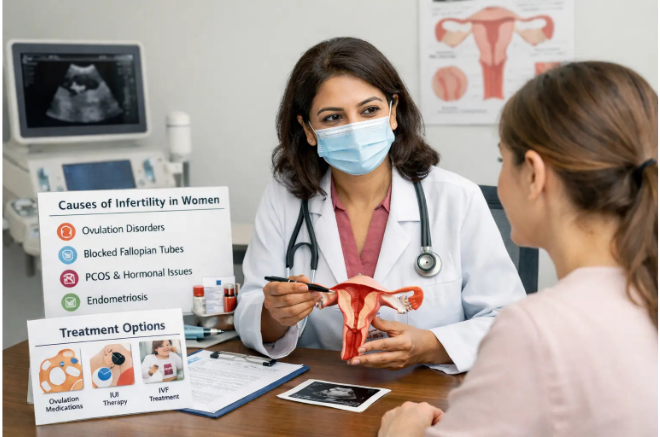
Infertility in Women: Causes, Symptoms and Treatment Options
Infertility is a sensitive and emotional topic for many couples who dream of starting a family. While pregnancy happens naturally for many people, some couples may face challenges when trying to conceive. Female infertility is one of the most common reasons couples seek medical advice when pregnancy does not occur after months of trying.
Infertility in women refers to the inability to conceive after having regular, unprotected intercourse for about 12 months. It can also refer to situations where a woman is able to conceive but cannot carry the pregnancy to full term. The good news is that with proper diagnosis and treatment, many fertility issues can be successfully managed.
Understanding the causes, symptoms, and treatment options can help women take the right steps toward improving their chances of conceiving.
Understanding Female Infertility
Female infertility can occur due to several biological or hormonal factors that interfere with ovulation, fertilization, or implantation. In many cases, the condition is treatable once the underlying cause is identified.
Medical research shows that infertility affects millions of couples worldwide. According to the World Health Organization, infertility is a common reproductive health issue that can affect both men and women.
Women experiencing difficulty in conceiving should not panic, but it is important to seek medical advice if pregnancy does not occur after a year of trying.
If you are planning to conceive, it is helpful to first understand how the female reproductive system works and how certain conditions may affect fertility.
Common Causes of Infertility in Women
One of the most common causes of female infertility is ovulation disorders. Ovulation is the process where the ovary releases an egg each month. If ovulation does not occur regularly, it becomes difficult for fertilization to happen.
Hormonal imbalances can disrupt ovulation and lead to conditions such as polycystic ovary syndrome (PCOS). Women with PCOS often experience irregular menstrual cycles, which can make pregnancy more difficult.
Another important factor is the health of the fallopian tubes. These tubes carry the egg from the ovaries to the uterus. If they become blocked due to infections, pelvic inflammatory disease, or previous surgeries, the sperm may not be able to reach the egg.
Endometriosis is another condition that may affect fertility. It occurs when tissue similar to the lining of the uterus grows outside the uterus. This condition can cause inflammation and affect reproductive organs.
Age is also a major factor in female fertility. As women grow older, the number and quality of eggs decrease, especially after the age of 35. This natural decline can make conception more difficult.
Lifestyle factors such as smoking, obesity, excessive alcohol consumption, and stress may also impact fertility.
Symptoms of Female Infertility
In many cases, infertility may not show obvious symptoms. The main sign is difficulty in becoming pregnant.
However, some women may notice irregular or absent menstrual cycles. Hormonal problems may cause symptoms like excessive facial hair, acne, or sudden weight changes.
Pain during menstruation or sexual intercourse may also indicate underlying conditions like endometriosis.
Women who are planning pregnancy should also pay attention to their menstrual cycle patterns. Understanding ovulation timing can improve the chances of conceiving.
You can also learn more about preparing your body for pregnancy in this helpful guide on Preparing for Pregnancy
How Female Infertility is Diagnosed
If pregnancy does not occur after a year of trying, doctors may recommend fertility evaluation.
The diagnostic process usually begins with a detailed medical history and physical examination. Doctors may also recommend certain tests such as blood tests to evaluate hormone levels and ovulation.
Ultrasound scans can help identify structural problems in the uterus or ovaries. In some cases, specialized procedures like laparoscopy may be used to examine reproductive organs.
Early diagnosis helps doctors determine the most suitable treatment options and improves the chances of successful pregnancy.
Treatment Options for Female Infertility
Treatment for infertility depends on the underlying cause. Many women are able to conceive with the help of medical guidance and fertility treatments.
Ovulation induction is a common treatment method where medications are used to stimulate ovulation. These medications help regulate hormonal activity and improve the chances of egg release.
Intrauterine insemination (IUI) is another treatment where specially prepared sperm is placed directly into the uterus during ovulation.
Some women may require surgical procedures to correct conditions such as blocked fallopian tubes or endometriosis. In advanced cases, assisted reproductive technologies like IVF may be recommended.
Women experiencing pregnancy complications may also require specialized care. For example, High Risk Pregnancy Care require expert monitoring to ensure the health of both mother and baby.
When to See a Fertility Specialist
Women under the age of 35 should consider consulting a doctor if pregnancy does not occur after 12 months of trying. Women over 35 should seek medical advice after six months.
Early consultation helps identify potential issues and allows couples to explore available treatment options sooner. Check out here for more detailsSecond Opinion Gynae
Final Thoughts
Infertility in women can feel overwhelming, but it is important to remember that many couples successfully overcome fertility challenges with the right medical support. Advances in reproductive medicine have made diagnosis and treatment more effective than ever before.
By understanding the causes and symptoms of infertility and seeking timely medical care, women can significantly improve their chances of achieving a healthy pregnancy.
If you are concerned about your fertility or planning to start a family, consulting an experienced gynecologist can help you make informed decisions and take the next step toward parenthood.
Author
DR ANU VIJ MD; FICOG; PGDHHM; PGDMLS